The Black Athlete
The life of today's black athlete, and how it influenced a movement at MU
By Aaron Reiss and Jacob Bogage
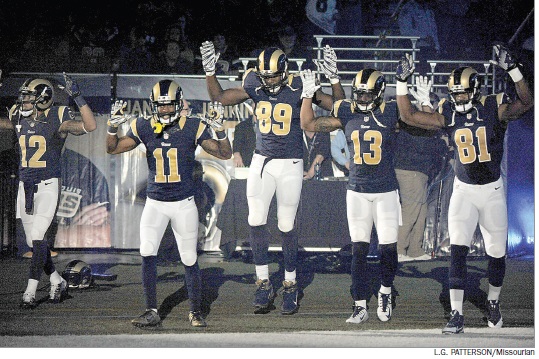
Anthony Sherrils volunteered first. He and hundreds of fellow Missouri student athletes had just sat through a panel hosted by Men4Men, a Missouri athletics initiative that holds one event per semester. All male Tiger athletes are required to attend. The event took place in the lounge area of club seating at Memorial Stadium, where fans pay big to watch guys like Sherrils play. But this event wasn’t for fans. It was for athletes to listen and learn and discuss their feelings. The topic of the panel, as it was advertised on a flier handed out to the athletes: Why are race and racism so hard to discuss?
When the time came for an open discussion among athletes, Sherrils spoke for about five minutes, according to another Missouri athlete at the meeting, who remembers Sherrils telling his peers that he felt steered toward an easier degree because he’s a black student athlete. His comments kicked off a discussion that, at times, became contentious. An hour into the discussion, Missouri football’s strength coach, Pat Ivey, told the athletes they were having a good conversation. Ivey told them to take action.
Sherrils and his roommate, wide receiver J’Mon Moore, went home that night and talked about the culture at MU, according to Sherrils. They considered becoming more involved with the general student body. “That’s where it first came to our mind, some of the things that were going on,” Moore said. “There was kind of a snowball effect after that.”
That was Oct. 26. Nine days later, on Nov. 4, Moore was driving his car past the picturesque Mel Carnahan Quadrangle when a small village of tents and nearby signs piqued his interest. So he parked his car. He walked to the tents and read the signs about a hunger strike. He met a graduate student named Jonathan Butler, who, as part of the student activist group Concerned Student 1950, refused to eat until former University of Missouri System President Tim Wolfe resigned.
“That’s when I really got concerned,” Moore said of the first time he met Butler. The wide receiver said he made “some promises” to the man on the hunger strike. And three days later, he and 29 other black Missouri football players announced over Twitter they were boycotting all football activities until the president resigned. A local story became a national one, and by now you probably know how it played out. Missouri coach Gary Pinkel tweeted a photo that Sunday showing the Tigers — both black and white — in solidarity. Wolfe resigned Monday. And Butler ate. The Tigers resumed football activities after missing only one practice, and then beat Brigham Young in Kansas City a week after announcing their boycott.
Through it all, the power of today’s black student athlete emerged. Black athletes constitute much of the rosters in the revenue college sports, football and basketball, and their actions carry serious weight. Still, they exist in a separate orbit from other students. Their experiences — both as being black and as athletes — differentiate their lifestyles. It’s these differences that have made black athletes influential but often unwilling candidates to show defiance. Until now. The Tigers risked their status as Southeastern Conference football players and threatened forfeiting a game. Why now?
On the day Wolfe resigned and the football boycott ended, athletics director Mack Rhoades met with Missouri student athletes from multiple sports at Hearnes Center. Athletes asked questions about the boycott. Defensive end Charles Harris answered some of them, according to an athlete at the meeting. Earlier that day, Harris stood on the Carnahan quad in front of the Concerned Student 1950 encampment and said what the Tigers had done was a testament to the power all student athletes hold. At Hearnes, a female golfer asked Harris why the players needed to get rid of Wolfe — who was, if nothing else, a casualty to the athletic department’s message that the boycott would continue until Butler ate.
The athlete at the meeting remembers Harris saying the boycott wasn’t about Wolfe, it was about addressing a systemic issue. The athlete remembers Harris’ next comment vividly: “If you cut the head off,” Harris told his fellow student athletes, “the whole dragon will fall.”
‘You feel like a foreigner, an alien on campus’
The assignment seemed simple. Non-offensive. Scott Brooks told his “Introduction to Black Studies” class to go to Memorial Student Union, a hub for campus activity, and observe. Take notes of what’s going on around you, the way people interact.
Brooks is an associate professor of sociology at MU. He also is black. This assignment came during the Fall 2012 semester, his first at the university. He had two football players in his class, and when he sent his students out for the exercise, the players — including one whom Brooks said most people on campus would recognize — sat next to each other in one spot of the student union. Brooks could sense they were reluctant to truly put themselves out there.
After the observation period ended, Brooks huddled with his class. “Man, I didn’t like this,” the recognizable player said. “You had us go in there, and we look like a bunch of inner city kids from the Y on a field trip.” He told Brooks students looked at him and his teammate uncomfortably. Some moved their tables and bags away from the group. It didn’t matter that the players wore their team’s logo; students in Memorial Union treated them like other black students.
“Don’t you find it interesting that you’re being cheered by 50,000 plus, (and) here we are today and you feel like a foreigner, an alien on campus?” Brooks asked the player. “You got a slice of life of what a regular black student goes through, and now you’re offended? You’ve had this privileged status.”
There are markers that separate black athletes from other black students. Official team gear. Backpacks with name tags. Access to resources — such as a weight room and cafeteria at the Mizzou Athletics Training Complex — other students don’t get to use. And often that’s enough to create a significant difference between the experience of black athletes and non-athletes on campus. The disgruntled football player in Brooks’ class typically didn’t go to the student union because it wasn’t part of his routine as an athlete. When he left his element, he became exposed to the realities of black students.
The seeming lack of awareness to this reality, or general lack of exposure to it, is athletic privilege. It’s not that black athletes don’t encounter racism, they just don’t encounter it as “intensely,” Brooks said. Football players also experience hero worship, which makes it easier to deal with racial slights or micro-aggressions. When a store employee not-so-discreetly checks on a black athlete in an aisle or when someone makes a racial slur, these actions aren’t enough to prompt activism, typically. Black student athletes tend to care more about protecting their “most salient identity” — their athlete identity, Brooks said.
Read more: Norris Stevenson, Missouri's first black football player, ran through defenses, barriers


LATEST NEWS
-
WINNINGEST Take a look at the record behind Missouri’s most winningest coach, Gary Pinkel, before he says goodbye to the team ths season
-
FIRST BLACK FOOTBALL PLAYER Norris Stevenson left his mark by leading the Missouri team to a win over Oklahoma during the 1960 season.
-
TODDLERS TO TIGERS This future Missori Tiger was “the epitome of having middle child syndrome,” according to his mother.
-
WINNINGEST Take a look at the record behind Missouri’s most winningest coach, Gary Pinkel, before he says goodbye to the team ths season
-
FIRST BLACK FOOTBALL PLAYER Norris Stevenson left his mark by leading the Missouri team to a win over Oklahoma during the 1960 season.
-
TODDLERS TO TIGERS This future Missori Tiger was “the epitome of having middle child syndrome,” according to his mother.